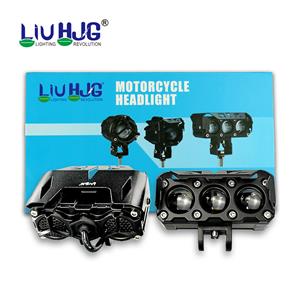
What Performances Do Off-road Motorcycle Lights Need?
LiuHJG
The global off-road motorcycle industry has grown rapidly in recent years, driving strong market demand for professional supporting lighting parts. Unlike conventional commuter motorcycles that run on flat urban roads, off-road motorcycles frequently tackle rugged mountains, muddy wetlands, gravel deserts and unmaintained wild roads. Such extreme application scenarios put forward stricter and more comprehensive performance requirements for off-road motorcycle lights. Ordinary motorcycle lights designed for daily commuting are limited in structural stability and environmental adaptability, prone to failure, light decay and damage in complex off-road environments. Therefore, professional off-road motorcycle lights must be equipped with multiple professional performances to ensure safe and stable night riding. For B-end manufacturers, cross-border wholesalers and modified parts dealers, clarifying the essential performances of off-road motorcycle lights is the core basis for product development, selection and market promotion.
Outstanding shock resistance is the most fundamental performance of qualified off-road motorcycle lights. Off-road riding is accompanied by continuous vibration, road jolts and occasional impact collisions. Ordinary lamp bodies adopt simple assembly structure with fixed single parts. Long-term severe vibration will cause internal circuit loosening, solder joint falling off and lamp shell cracking, leading to sudden lighting failure. Professional off-road motorcycle lights adopt integrated body molding and built-in shock absorption structure. The internal circuit board is fully glued and fixed, with shockproof gaskets installed at the connection positions. This optimized structure can effectively buffer strong vibration and impact force, prevent component loosening and damage, and ensure long-term stable operation of lights in high-frequency jolt off-road scenarios.
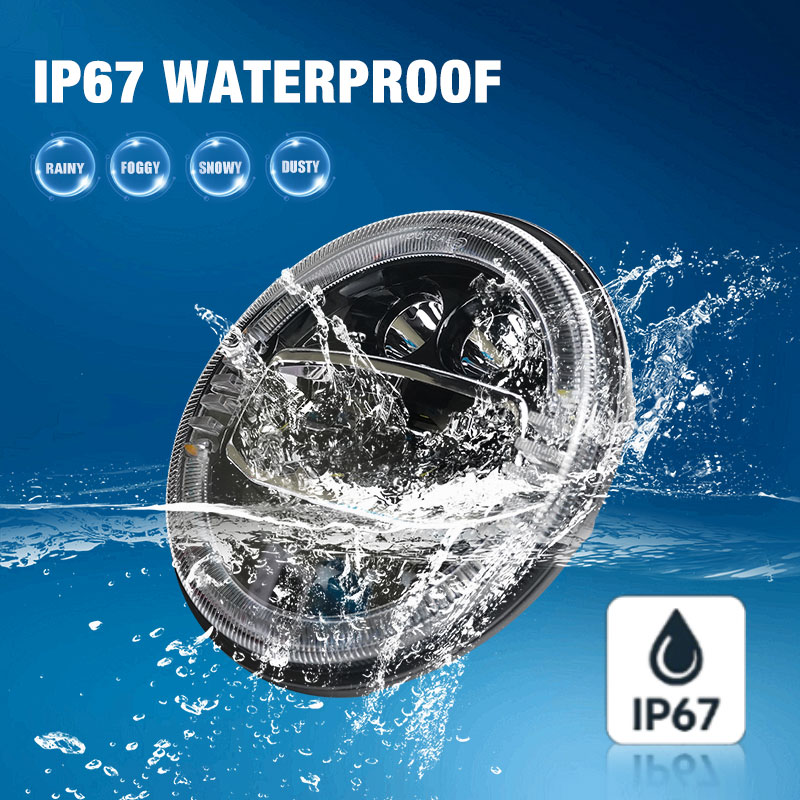
High-level waterproof and dust proof performance is essential for off-road motorcycle lights to adapt to all-weather complex terrain. Off-road environments are harsh and changeable, with mud splashing, rainstorm scouring, sandstorm diffusion and high humidity all year round. Ordinary motorcycle lights have low sealing performance, which easily allows water vapor and fine dust to penetrate into the lamp body, resulting in lens fogging, internal circuit damp and short circuit burnout. Professional off-road motorcycle lights generally reach IP68 waterproof and dust proof standard, adopting fully closed sealing structure, high temperature resistant rubber rings and full insulation glue pouring technology. The overall structure can effectively isolate rainwater, sediment and dust invasion, maintain internal circuit drying and stability, and adapt to wading, muddy and dusty extreme working conditions.
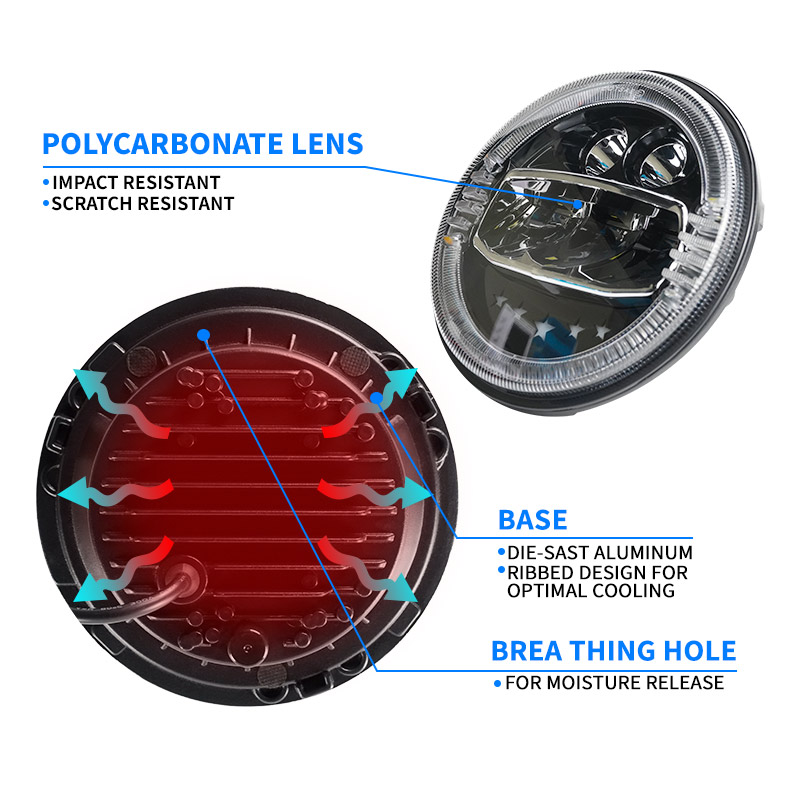
Efficient heat dissipation performance directly affects the service life and long-term stability of off-road motorcycle lights. Off-road night riding requires long-time continuous lighting with high power output, which will generate massive heat inside the lamp body in a short time. Ordinary lights rely on passive heat dissipation with slow heat discharge efficiency. Accumulated high temperature will accelerate LED bead aging, cause serious light decay, and even burn out internal components. High-quality off-road motorcycle lights are equipped with high-purity aluminum alloy heat dissipation fins and scientific heat conduction structure. The active and passive combined heat dissipation system can quickly export internal heat, stabilize the lamp body working temperature, reduce high-temperature aging loss, and maintain lasting and stable lighting performance under long-term high-load working conditions.
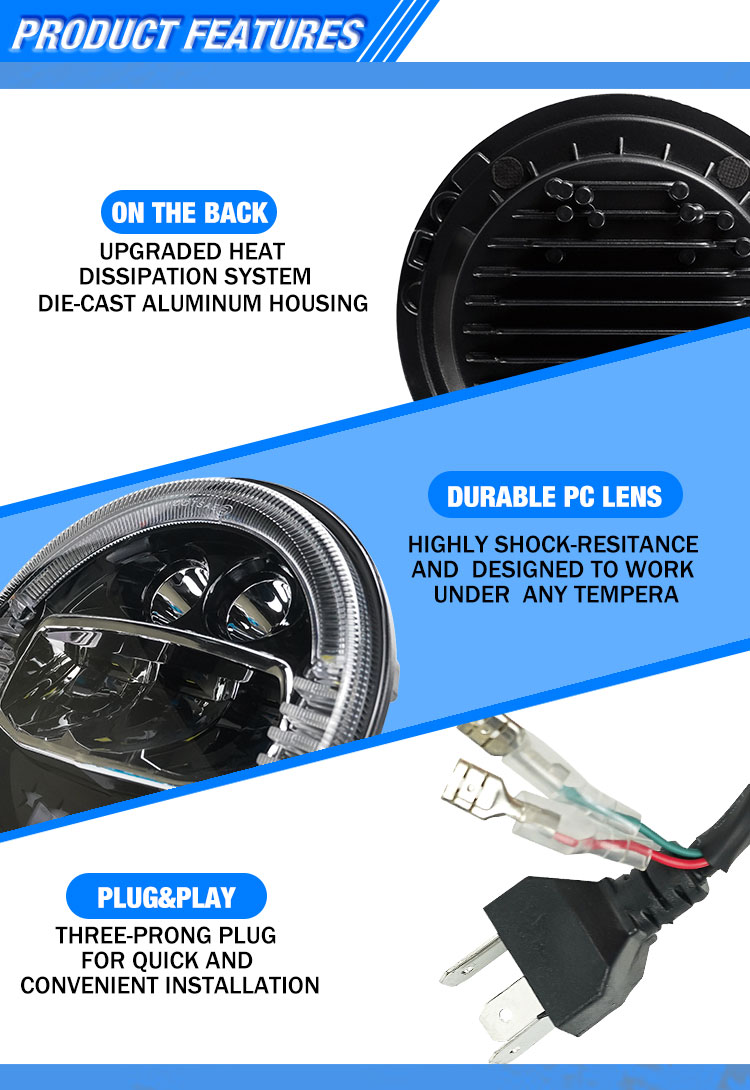
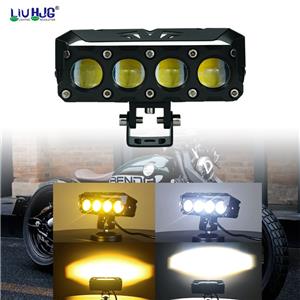
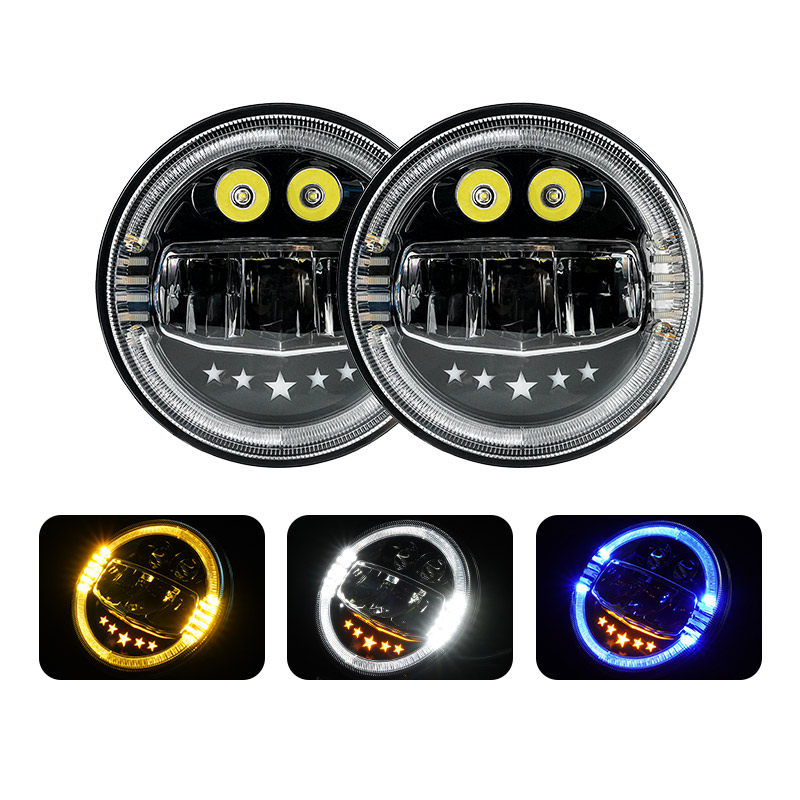
High-penetration lighting performance is the core functional advantage of professional off-road motorcycle lights. Most wild off-road roads lack basic lighting facilities, with thick fog, floating dust and dim light all year round. Ordinary motorcycle lights have scattered light beams and weak penetration, unable to penetrate fog and dust, resulting in blurred road vision and poor obstacle recognition ability. Professional off-road motorcycle lights adopt precise optical light distribution design, forming concentrated, uniform and high-penetration light beams. The optimized light type can clearly illuminate rugged road surfaces, road edges and distant obstacles in dark, foggy and dusty environments, greatly improving night riding safety and terrain adaptability.
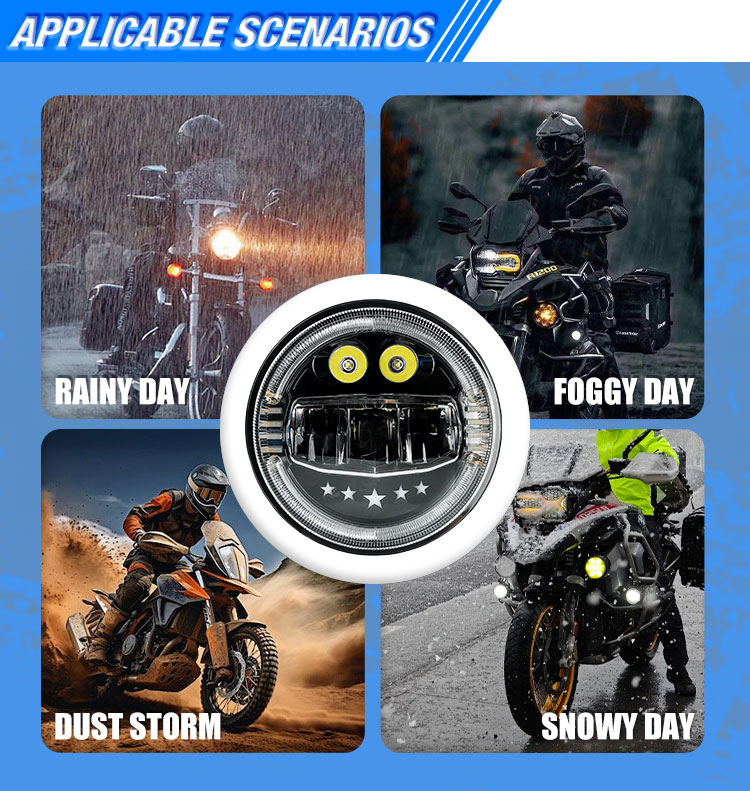
In conclusion, professional off-road motorcycle lights need five core performances including reliable shock resistance, high-standard waterproof and dust proof, efficient heat dissipation, high-penetration lighting and all-weather environmental adaptability. These key performances complement and support each other, solving the failure pain points of ordinary lights in extreme off-road scenarios. With the continuous upgrading of global off-road motorcycle consumption demand, high-performance and high-stability off-road lights have become the mainstream trend of the industry. For B-end enterprises, optimizing these five core performances can effectively improve product competitiveness, reduce after-sales risks, and better meet the diversified procurement needs of the global off-road motorcycle parts market.